Overview
Consolidating high-interest debt into your mortgage or a home equity line of credit replaces several payments with one at a much lower rate, usually improving monthly cash flow. You can refinance up to 80% of your home's appraised value to do it. The trade-off is that short-term debt is moved onto a long amortization, so the plan should include paying it down faster.
Jump to Section
Mortgage Debt Consolidation Overview
Life is known for its sudden changes — sometimes for the better, sometimes for the worse. When you find yourself battling what feels like unmanageable debt, there are solutions that exist to help get you back on your feet.
People often find themselves in financial situations they didn't expect, and it's nothing to be ashamed of. With proper professional assistance from a licensed mortgage broker, you can begin to see the light at the end of the tunnel.
How Debt Consolidation Works
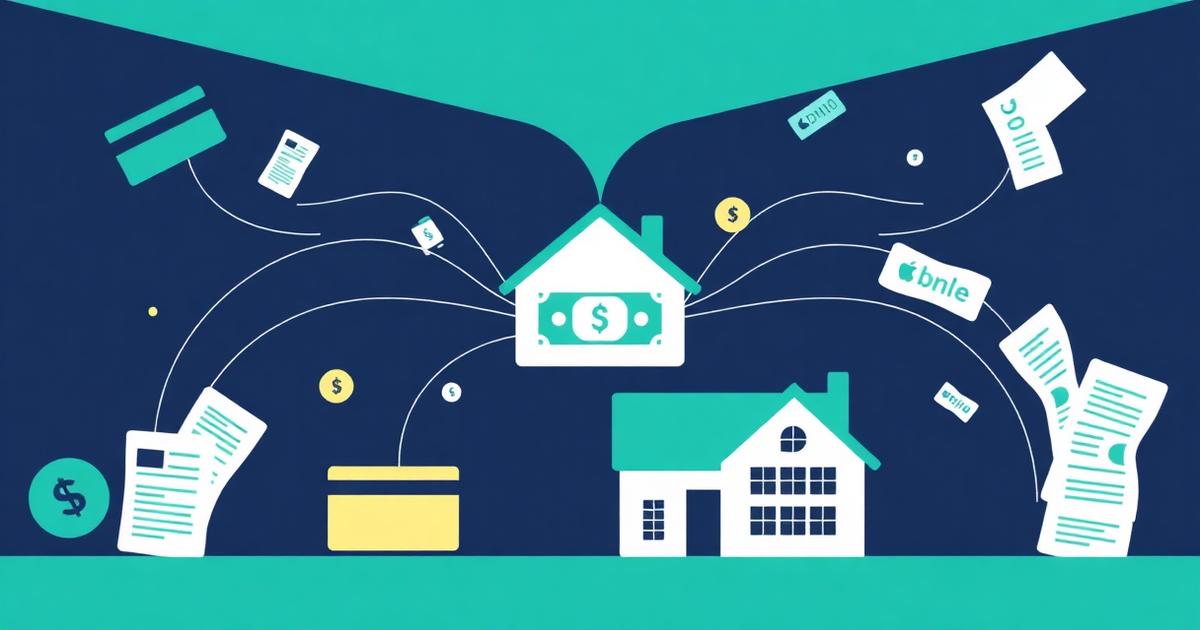
To consolidate means to "gather together into one." When you consolidate debt, you gather debts from separate loans, lines of credit, credit cards, and other sources and combine them into a single payment with a lower interest rate.
For borrowers who have multiple outlets of debt, it can be tough to keep track of them all — increasing the likelihood of missed payments or higher interest charges. When debts are consolidated, they are generally moved from high-interest sources (such as credit cards) onto a lower interest rate, helping you pay debt off more efficiently and reduce the overall cost of borrowing.
Why Paying Down Debt Matters
When lenders assess a potential borrower's file, one of their key goals is to determine the borrower's risk level — your ability to pay back your debts. To do this, they look at your credit score, credit report, and overall financial profile.
If you have debt that isn't properly managed, your credit score is likely taking the hit. To be an attractive borrower to lenders, you'll want your credit score in a very good or excellent range, show that payments were made on time, and maintain a low total debt ratio (TDR).
When borrowers choose to consolidate debts, they do so with the intent to pay down their debt quicker. Paying off debt faster often means less money is contributed towards interest over time, freeing up more funds for savings, investments, or other financial goals.
Staying in Control of Your Spending
Debt consolidation isn't a free pass to spending more money. Just because you're enjoying the freedom of having access to more funds each month thanks to a lower interest rate does not mean you should be spending frivolously.
Debt consolidation should be respected as a solution to get you out of debt — not to keep you in it. If you'd appreciate help with your finances, speaking to a trusted financial advisor may also be a great avenue for budgeting and long-term financial planning.
Debt Consolidation Solutions Available in Canada
There are many debt consolidation solutions available — what works for one borrower may not work for the next. Some common avenues include:
The interest rate on a HELOC is often much lower than that of a personal credit card or loan because it uses your home's equity as security. A licensed mortgage broker can help you determine which debt consolidation solution is the best fit for your unique situation.
Real-World Scenario
How Debt Consolidation Changed Everything
The following is a fictional scenario that illustrates how this service can make a real difference.
Mark & Julie, 36 & 34 — Homeowners in Edmonton, AB
The Situation
Mark and Julie owned a home in Edmonton worth $485,000 with a mortgage balance of $290,000. Over the past few years, between vehicle purchases, home repairs, and everyday expenses, they had accumulated $67,000 in combined debt: $28,000 on credit cards (21% interest), a $24,000 car loan (6.9%), and a $15,000 personal line of credit (9.5%). Their total monthly debt payments were $2,850 on top of their $1,650 mortgage payment.
The Challenge
With $4,500 going out the door each month in debt and mortgage payments, Mark and Julie were barely keeping up. They had no room to save, were stressed about finances, and had started discussing whether they needed to sell their home. They approached their bank about consolidating, but were told they didn't qualify for a large enough personal loan.
The Solution
I refinanced their mortgage to roll in all $67,000 of high-interest debt. Their new mortgage balance was $362,000 — still well within the 80% LTV limit. By consolidating everything at their new mortgage rate of 4.54% and extending the amortization, their single monthly payment dropped to $2,050. There was a small prepayment penalty of $3,200, which was absorbed into the refinance.
The Outcome
Mark and Julie went from $4,500 per month in combined payments down to $2,050 — saving $2,450 per month. They committed to putting $1,000 of those monthly savings into accelerated mortgage payments, which will have them debt-free years ahead of schedule. The remaining $1,450 in monthly savings went toward rebuilding their emergency fund and starting an education savings plan for their two children.
*This is a fictional scenario for illustrative purposes only and does not represent a real client or actual mortgage application. Individual results and qualification criteria may vary.
Frequently Asked Questions
How much equity do I need for debt consolidation?
You typically need at least 20% equity in your home to consolidate debt through refinancing or a HELOC.
Will debt consolidation save me money?
In most cases, yes. Mortgage and HELOC rates are significantly lower than credit card or personal loan rates. I'll calculate the full picture including any penalties to ensure it makes financial sense for your situation.
What types of debt can be consolidated?
Most forms of debt can be consolidated including credit card balances, car loans, personal loans, lines of credit, and other outstanding debts.
Will debt consolidation affect my credit score?
Initially, refinancing may cause a small dip in your credit score. However, consolidating debt and making consistent, on-time payments will typically improve your credit score over time.